The Role of Osseointegration in Dental Implants
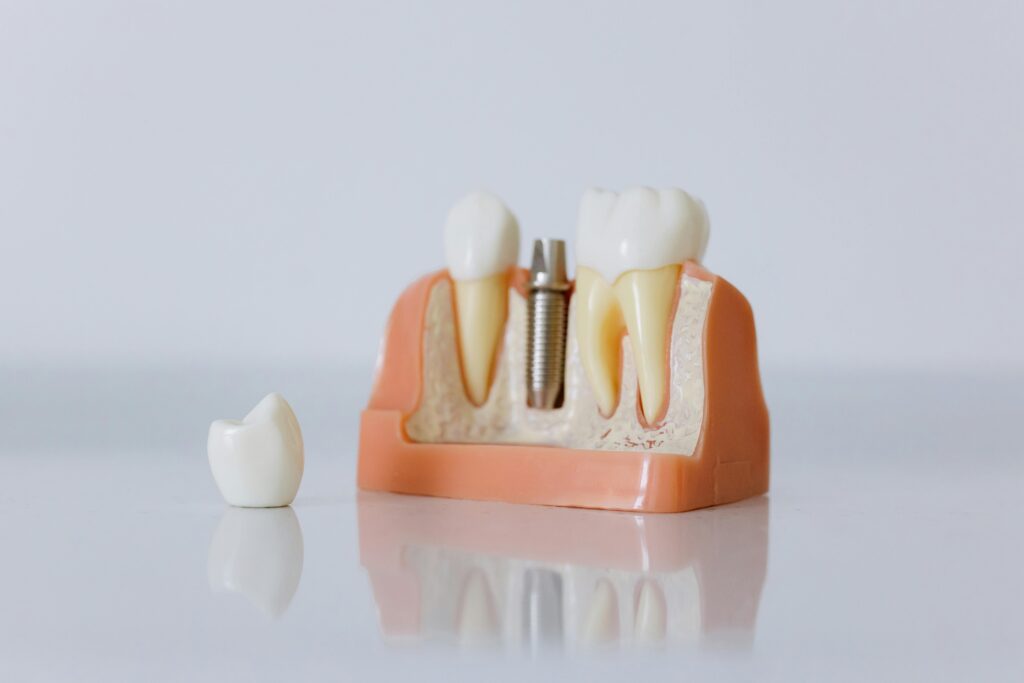
Ask any implant dentist what separates a stable implant from a failed one, and the answer usually comes back to the same biological event: osseointegration. The prosthetic crown may be what the patient sees, and the titanium fixture may be what the surgeon places, but neither matters for long if the bone never accepts the implant as part of a functioning system. Osseointegration is the quiet, invisible success story underneath every reliable dental restoration.
For patients, the term can sound abstract. For clinicians, it is the foundation of treatment planning, surgical technique, healing timelines, and long-term prognosis. When it goes well, the implant feels solid, chewing becomes comfortable, and the restoration can serve for many years. When it goes poorly, even a beautifully placed implant with an ideal-looking crown may loosen, inflame the surrounding tissues, or fail outright.
That is why osseointegration deserves more attention than it often gets. It is not a marketing term. It is a biological process with real mechanical consequences, shaped by bone quality, surgical handling, implant surface design, systemic health, and patient behavior during healing.
What osseointegration actually means
In practical terms, osseointegration is the direct structural and functional connection between living bone and the surface of an implant. Instead of a fibrous layer forming around the implant, which would act like a weak interface, the body builds bone right up to the implant surface. This creates the stability needed to support everyday forces from biting, chewing, and speaking.
The concept transformed implant dentistry. Earlier attempts at tooth replacement often struggled because materials or techniques triggered movement, inflammation, or poor bone response. Once the profession understood that certain materials, particularly commercially pure titanium and titanium alloys, could support intimate bone contact under the right conditions, Dental Implants became far more predictable.
That predictability does not mean automatic success. Osseointegration is not a switch that flips on after surgery. It is a sequence of healing events that unfolds over weeks and months. Blood fills the surgical site. Cells migrate in. Bone is remodeled. Early mechanical stability gradually gives way to biological stability. That transition period is where judgment matters most.
Why titanium changed the field
Titanium became the standard for a reason. It forms a stable oxide layer on its surface, and that layer helps make the material biocompatible. Bone does not treat titanium like natural tooth structure, but under controlled conditions it can grow tightly against it in a durable way.
In day-to-day practice, this matters because the implant is not simply being screwed into bone like hardware into wood. The initial insertion creates primary stability, which is mostly mechanical. After that, the body has to participate. If the surface chemistry, topography, and surgical conditions support healing, the implant gains secondary stability from new bone formation and remodeling.
Modern implant surfaces are often roughened or treated to improve this response. A moderately rough surface generally offers better bone apposition than the smoother surfaces used decades ago. That said, surface technology is only one factor. A premium implant cannot rescue poor case selection, overheated bone, uncontrolled diabetes, or a patient who resumes smoking heavily the day after surgery.
Primary stability versus biological stability
One of the most common misunderstandings among patients is the idea that if an implant feels tight on the day it is placed, the hard part is over. In reality, that tightness can be misleading if it is interpreted as permanent success. An implant may feel very firm because the threads are engaging bone well, especially in dense mandibular bone. But during healing, some of that initial mechanical stability can dip before new bone matures around the implant.
This is the phase that requires restraint. In cases where early loading is not appropriate, too much micromovement can interfere with bone formation and encourage fibrous encapsulation instead. Clinically, that means a solid-feeling implant at placement can still fail if it is stressed before osseointegration is established.
This is also why timelines vary. A straightforward lower posterior implant placed in dense bone may be ready for restoration sooner than an implant in the posterior maxilla, where bone tends to be softer and sinus anatomy may complicate matters. The biology is the same, but the local conditions are not.
What happens in the bone after placement
After the osteotomy is prepared and the implant is inserted, the body begins a healing response that resembles fracture healing in some ways, though the mechanics are different. Blood clot formation occurs first. That clot becomes a scaffold for incoming cells. Inflammatory cells arrive, then osteogenic cells begin laying down new bone. Over time, woven bone forms and is later remodeled into more organized lamellar bone.
The details matter because bone is not static. It is constantly responding to stress, vascular supply, and local inflammation. The implant site needs enough blood flow, enough viable bone, and enough stability for this remodeling process to proceed in a constructive way.
Surgeons learn early that bone can look healthy and still behave differently from one area to another. Thick cortical bone offers excellent initial engagement but may heal more slowly if the osteotomy is overly compressed. Softer cancellous bone can be forgiving in some respects but may provide less immediate stability. That balance shapes everything from drill sequence to healing protocol.
Surgical technique has a direct effect on osseointegration
Implant success is often discussed in broad terms, but many failures can be traced to technical details that seem small in the moment. Heat generation during osteotomy preparation is one of the best known examples. Bone does not tolerate excessive thermal injury well. If drilling is done without adequate irrigation, with dull burs, or at poor speed control, the surrounding bone can be damaged before the implant is even placed.
Overcompression is another issue. It sounds counterintuitive because clinicians want a stable implant, yet bone packed too tightly around the implant can lose vascularity and undergo necrosis in localized areas. Modern protocols often emphasize obtaining stability without excessive compression, especially in dense bone.
Implant positioning also influences osseointegration indirectly. An implant placed too buccally, too deeply, or at an unfavorable angle may still integrate initially, but it may create restorative or hygienic problems that compromise long-term tissue health. Success is not just whether bone touches titanium at twelve weeks. It is whether the implant can function for years in a way that preserves both hard and soft tissues.
The patient factors that matter more than many realize
Patients often focus on the procedure itself, but the host response is equally important. Two people can receive the same implant system from the same surgeon using the same protocol and still heal differently.
Several patient-related factors repeatedly influence osseointegration:
- Smoking reduces blood flow and impairs healing, especially in heavy users.
- Poorly controlled diabetes can slow tissue repair and increase complication risk.
- Low bone volume or poor bone density may reduce initial stability.
- Bruxism can overload an implant during or after healing.
- Oral hygiene and periodontal history affect long-term tissue health around the implant.
Each of these factors is manageable to some extent, but none should be treated casually. A patient with excellent home care and stable glycemic control may do quite well. A patient with active periodontal disease, nightly clenching, and inconsistent follow-up is a different kind of case, even if the radiograph initially looks favorable.
One pattern that comes up often in practice is the patient who believes implants are immune to the problems that affected their natural teeth. They are not. Implants do not decay, but the tissues around them can become inflamed, and bone can still be lost. Osseointegration gives the implant its starting point, not an unlimited warranty.
Healing times are biology, not inconvenience
Patients naturally ask how long the process will take. They are usually trying to plan work, travel, appearance, and finances. The most honest answer is that healing times are partly protocol-driven and partly dictated by biology.
For a routine implant in healthy bone, clinicians often allow several weeks to a few months for integration before definitive loading. Immediate placement and immediate provisionalization are possible in selected cases, but these are not shortcuts. They are techniques that demand excellent case selection, strong primary stability, controlled occlusion, and patient compliance.
There is a tendency in some settings to present faster treatment as inherently better. In reality, faster is only better when it remains biologically sound. A three-month healing period can feel long to a patient missing a front tooth, but it is far preferable to rushing a case and losing the implant. Re-treatment is usually more expensive, more invasive, and more emotionally difficult than doing the initial phase carefully.
Bone quality changes the strategy
Not all jaws offer the same starting conditions. Dense anterior mandible bone often provides impressive insertion torque and favorable stability. Posterior maxillary bone is frequently softer, with less Dental Implants cortical support and proximity to the sinus. Those differences affect drill design, underpreparation strategy, implant geometry, and whether adjunctive grafting is needed.
Bone volume matters just as much as density. If the ridge is too narrow or too short, grafting may be required before or during implant placement. Bone grafting does not guarantee success, but when done well it creates a more favorable environment for implant support. The graft must mature, become vascularized, and integrate with the host site before it can reliably contribute to long-term implant stability.
Clinicians with experience in both straightforward and advanced implant cases tend to develop respect for borderline sites. The radiograph that looks “good enough” can still hide a thin buccal plate, a concavity, or a sinus floor issue that changes the surgical risk. Osseointegration depends not just on placing an implant in bone, but on placing it in the right amount and quality of bone with a restorative plan that makes sense.
When osseointegration fails
Failures tend to fall into two broad windows. Early failure occurs before or shortly after loading, when osseointegration never fully establishes or breaks down during healing. Late failure happens after a period of function, often related to overload, peri-implant disease, or systemic changes.
Early failure can be deceptively subtle. Sometimes the implant simply lacks the expected stability at uncovering. Sometimes there is pain, mobility, or persistent radiolucency. Other times the patient reports that “it never felt right” even though the soft tissue looked acceptable. In those cases, removal is usually straightforward if recognized early, and re-treatment may still be possible after site healing.
Late failure often has a more complex story. Occlusal overload, poor plaque control, untreated peri-implant mucositis, a history of periodontitis, prosthetic misfit, and smoking can all contribute. It is rarely one single factor. More often, a stable implant is gradually pushed beyond the capacity of the surrounding tissues to adapt.
A point worth emphasizing is that mobility in a true osseointegrated implant is not normal. Natural teeth have a periodontal ligament and some physiologic movement. Implants do not. If an implant moves, the attachment to bone is compromised.
The restorative phase can protect or undermine the biology
A successful surgery is only part of the story. The prosthetic design has to respect the limits of the implant and the surrounding tissues. Emergence profile, crown contour, occlusal scheme, screw access position, and cleansability all influence long-term maintenance.
Overcontoured crowns are a common problem. They may look full and natural at delivery, but if they create plaque traps or make flossing nearly impossible, inflammation often follows. Likewise, a crown that receives excessive lateral force in a bruxing patient can overload the implant-bone interface over time.
This is one reason experienced teams think backward from the final restoration. The surgeon, restorative dentist, and laboratory should all be aligned on implant position and restorative goals before placement. It is far easier to preserve osseointegration than to compensate later for an implant that was integrated in the wrong place.
What patients can do during healing
Most implant complications are not caused by dramatic errors. They arise from accumulation, a little too much movement, a little too much force, a little too much plaque, too little follow-up. The postoperative period matters because that is when the implant is vulnerable to disruption that may not be obvious immediately.
The practical priorities for patients are straightforward:
- Follow diet restrictions, especially if the implant has a temporary restoration.
- Keep the site clean using the exact method recommended by the dental team.
- Avoid smoking or reduce it as much as possible during healing.
- Attend review appointments, even if the area feels fine.
- Report unusual pain, swelling, or mobility promptly.
What surprises many patients is that healing can look uneventful even when integration is not progressing ideally. Lack of pain does not guarantee success. That is why review visits and radiographic checks remain important.
Osseointegration and long-term implant maintenance
Once integrated, an implant enters a maintenance phase rather than a finished phase. The same implant can remain healthy for decades or develop progressive bone loss depending on what happens afterward. Regular maintenance is not just a cleaning appointment. It includes probing with appropriate technique, assessment of bleeding, evaluation of plaque control, radiographic comparison when indicated, and checking the prosthesis for looseness or wear.
Patients with a history of gum disease need particularly close observation. The tissues around implants are less forgiving in some respects than the periodontium around natural teeth. When peri-implant inflammation progresses, bone loss can occur faster than many patients expect.
Night guards also deserve mention. For patients who clench or grind, occlusal protection oaksdentistry.com Dental Implants can be valuable, especially when multiple implants or posterior restorations are involved. Bone can adapt to functional loading, but repetitive parafunctional overload is a different scenario. Preserving osseointegration sometimes means managing forces the patient does not even realize they generate.
Newer materials and techniques, same biological principle
Zirconia implants, modified implant surfaces, guided surgery, and digital workflows have all expanded what clinicians can offer. These advances are useful, and in some cases they improve precision or patient comfort. Still, none of them change the basic requirement that bone must heal in stable contact with the implant surface.
Digital planning can improve implant positioning. Guided surgery can reduce some variables. Surface modifications may accelerate early bone response. Immediate protocols can shorten treatment time in selected cases. Yet the core principle remains unchanged: osseointegration is earned biologically, not declared technologically.
That perspective helps cut through hype. Patients do not need the newest phrase or the most polished animation. They need a site that has been evaluated properly, a procedure carried out with respect for bone and soft tissue, and a restoration that does not sabotage the result.
Why this process deserves respect
Osseointegration is easy to take for granted because successful Dental Implants have become common. A patient bites into food, smiles in photos, and forgets the implant is there. That ordinary success can make the underlying biology seem routine. It is not routine. It is remarkably sophisticated healing guided by thoughtful planning and careful execution.
Every reliable implant case reflects dozens of good decisions. The extraction was timed appropriately. Infection was managed. The ridge was assessed honestly. The drilling protocol matched the bone. The implant was stable without being overcompressed. The patient was informed clearly. The provisional was designed conservatively. The maintenance schedule was not treated as optional.
When those pieces come together, osseointegration does what it is supposed to do. It turns a manufactured implant into a functional part of the oral system, capable of carrying load, preserving comfort, and supporting a restoration that feels dependable. That is the real role of osseointegration in Dental Implants. It is not a background detail. It is the biological event that makes everything else possible.
Oaks Dental
5000 Parkway Calabasas Suite 308
Calabasas, CA 91302, United States
+1 818-431-2000
FAQ About Dental Implants
What is the downside of a dental implant?
Implants require surgery and a healing period that can last several months. Possible complications include infection, nerve or sinus injury, damage to nearby teeth and failure to bond with bone. Your dentist should assess your health, bone support and alternatives before recommending treatment.
What do dental implants typically cost?
There is no single price for every implant case. The number of teeth replaced, implant components, final restoration and any grafting or extractions affect the total. Request a written estimate covering every stage and confirm insurance benefits and out-of-pocket costs with the practice.
How long do tooth implants last?
An implant can provide long-term support and may last a lifetime with good oral hygiene and regular dental care, but this is not guaranteed. The crown or other restoration may need replacement sooner. Smoking, gum disease and some health conditions can reduce implant success.